
Making Sense of the Ein Mishpat Ner Mitzvah
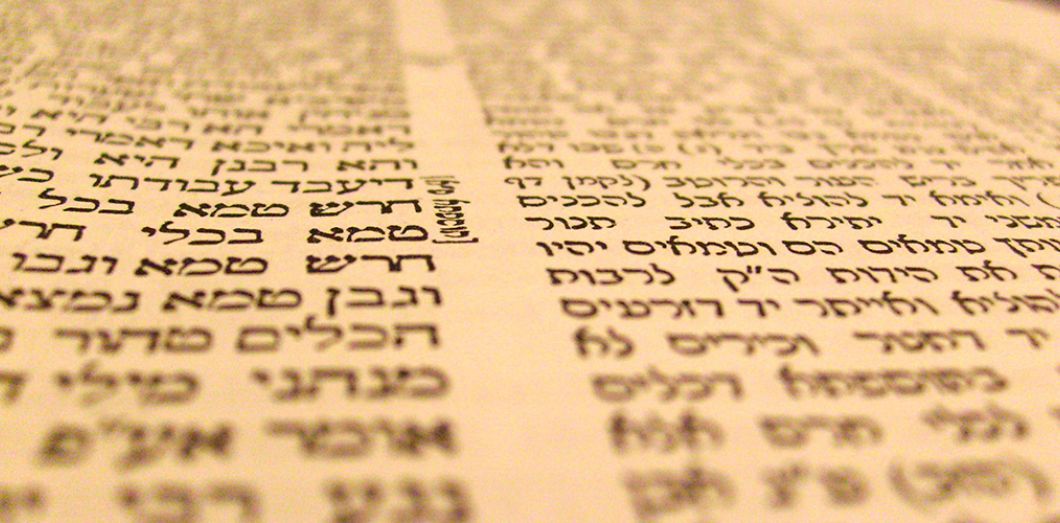
In the upper corner of the outer margin of the standard page layout of the Talmud (the so-called “Vilna Shas”) is a set of notes under the heading עין משפט נר מצוה. The notes under this heading cross-reference laws and principles mentioned in the Talmud with the places in the medieval halachic literature where they were codified. In this essay, I’ll teach you how to read it and locate the texts it references!
What is it?
The Ein Mishpat Ner Mitzvah was compiled by R’ Yehoshua Boaz ben Shimon Baruch in the 16th century. The scion of a prominent Spanish family, he left Spain after the Jews were exiled from there and settled in Italy, where he published several different commentaries and sets of notes on the Talmud, which are still printed in the standard Vilna editions of the Talmud. He also wrote other commentaries, particularly the Shiltei Ha-Gibborim, a set of critical notes on the commentary of the Rif (R’ Yitzchak Alfasi), by which title R’ Yehoshua Boaz is also known.
The name Ein Mishpat Ner Mitzvah means “Wellspring of Judgment, Lamp of the Commandment”. The phrase “Ein Mishpat” is a reference to Genesis 14:7, which refers to a place in Canaan called “Ein Mishpat”; here the phrase is intended to mean that the Talmud itself is the wellspring of the judgments and rulings of the halakha. Likewise, the phrase “Ner Mitzvah” comes from Proverbs 6:23, which says נר מצוה ותורה אור, meaning “The commandment is a lamp and the Torah is a light”; here, the phrase is used to mean that these notes “light the way”, as it were, to the locations of the codifications of the mitzvot in the law codes. (The continuation of the phrase, “Torah Or”, is the name of a different set of notes on the Talmud written by the same author, which give the citation to every quotation of a verse from Tanakh in the Talmud.)
The Ein Mishpat Ner Mitzvah is written in a very terse, abbreviated style. It is almost always printed in Rashi script, and many of the words in it are abbreviations and numerals.
Which works are referenced?
The Ein Mishpat Ner Mitzvah refers to three (or four, depending on how you count) major law codes from the period of the Rishonim (medieval rabbis):
Mishneh Torah
The earliest code is the Mishneh Torah (“Repetition of the Torah”) by the Rambam (Maimonides), compiled between 1170 and 1180. Sometimes the Mishneh Torah is called the Yad Ha-Ḥazakah (“Strong Hand”). The Mishneh Torah has fourteen sections (“yad” in Hebrew has the gematria value of 14, whence the name).
SeMaG
The Sefer Mitzvot Gadol (“Great Book of Commandments”) was written by the French Tosafist R’ Moshe ben Yaakov of Coucy, completed in 1247. This work is often called by its Hebrew initials as סמ״ג, or SeMaG (not to be confused with the atmospheric phenomenon or the dragon). It consists of two sections: one for positive commandments (“do this”) and one for negative commandments (“don’t do this”).
Tur and Shulḥan Aruch
The Tur was composed by R’ Yaakov ben Asher in the early 14th century, in Toledo, Spain. The Tur is more properly called the Arba’ah Turim (“Four Rows”), referring to the four rows of precious stones on the breastplate of the Kohen Gadol, so called because it is divided into four sections. However, the work is very commonly called just the “Tur” in the singular, and its author is often referred to as the Ba’al Ha-Turim (“Master of the Rows”).
The Shulḥan Aruch (“The Set Table”) was written by R’ Yosef ben Efraim Karo in 1563. R’ Karo, often called the Mechaber (“Composer” or “Author”), was another exile from Spain and Portugal, who moved around the Ottoman Empire, eventually settling in the city of Safed (Tzfat) in the Galilee. The Shulḥan Aruch is largely based on his earlier work the Beit Yosef (“House of Joseph”), which itself is a long and intricate commentary on the Arba’ah Turim. The Shulḥan Aruch, too, shares the same basic structure as the Tur.
Understanding the notes
As I mentioned, the Ein Mishpat Ner Mitzvah is a very pithy work, and many of the words in it are abbreviations or numerals. Irritatingly, you may find some words abbreviated in some printed editions but written out in full in others, or with different abbreviations. Another irritation is that the usage of single-geresh and gershayim (what we call apostrophes and double-apostrophes or inverted commas in English) is often inconsistent, especially with numerals—even within volumes produced by the same editor or publisher.
References in the Ein Mishpat Ner Mitzvah are given in chronological order: citations from the Mishneh Torah are presented first, then the SeMaG, then the Tur and Shulḥan Aruch.
But before you can read the note, you have to find the right note on the page! Here’s what you’re looking for.
How to find the correct note
To illustrate this, we’ll look at the very first note from the Ein Mishpat Ner Mitzvah, which occurs, of course, on the first page of the Gemara: Berachot 2a.
References to the Ein Mishpat Ner Mitzvah are block Hebrew letters in superscript, which come immediately before the text they refer to. The first line of the Mishnah has a small superscript א before the words משעה שהכהנים. The א points to the first note in the Ein Mishpat Ner Mitzvah in the upper-left corner of the page. The astute reader will note that this note is preceded by two אs: the first one is the running number of notes from the Ein Mishpat Ner Mitzvah in this chapter of Gemara, and the second one is specifically note א from our page.
Notice that on the next folio (page 3a—there are no Ein Mishpat Ner Mitzvah notes on page 2b), the first numeral keeps increasing (the first one is ז, meaning the seventh cumulative note in this chapter), but the second numeral (א) is the first note on that page (you can find it in the Gemara text about halfway down the page).
Note that sometimes multiple superscript letters refer to the same note—this happens with notes ב and ג on this very page!
How to parse the text of the note
As we’ll see, different editions sometimes print slightly different versions of the notes. In the volume of Gemara I’m looking at, the text of note א on page 2a says:
מיי׳ פ״א מהלכות ק״ש הלכה ט׳ סמ״ג עשין י״ח טור וש״ע או״ח סימן רל״ה סעיף א׳
Remember, these notes go chronologically: first the Rambam, then the SeMaG, then the Tur (and Shulḥan Aruch).
Rambam (Mishneh Torah)
The Mishneh Torah is cited as מיי׳ (short for מיימוני or מיימונידס). The basic structure of a reference to the Mishneh Torah is: (1) chapter from (2) volume, followed by (3) the specific halacha.
The first abbreviation will tell you the chapter number: for example, פ״ב is short for פרק ב, meaning “chapter 2”, פ״ט is short for פרק ט, meaning “chapter 9”, and so on. In our case, we have a reference to פ״א = פרק א, “chapter 1”.
Then the note will refer to a specific volume of the Mishneh Torah, often also by abbreviation. In our example, הלכות ק״ש is “Laws of Reciting the Shema” (ק״ש is an abbreviation for קריאת שמע). The מ before הלכות ק״ש is simply the prefix meaning “from”.
Finally, the note will point to the specific law in that volume, written out as הלכה (or abbreviated as הל׳) followed by the number of the halacha: in our example, הלכה ט׳ refers to halacha 9. Sometimes you even see this whole phrase abbreviated, e.g. ה״א for “halacha 1”.
So the note from our example breaks down like this:
| Hebrew | Expansion | Meaning |
|---|---|---|
| מיי׳ | מיימונידס | Rambam (Mishneh Torah) |
| פ״א | פרק א | chapter 1 |
| מהלכות | from Hilchot (“Laws of”) | |
| ק״ש | קריאת שמע | Keri’at Shema (“Reciting the Shema”) |
| הלכה | halacha | |
| ט׳ | 9 |
Putting it all together: Rambam (Mishneh Torah), Laws of Reciting the Shema, chapter 1, halacha 9.
SeMaG
The SeMaG is organized into two sections: לאוין lavin (“noes”, as in “negative commandments”) and עשין asin (“do-s”, as in “positive commandments”). There are 365 sections in the lavin and 248 in the asin. There is also a section of עשין דרבנן, “positive Rabbinic commandments”.
Notes from the SeMaG are fairly uncomplicated: first, the positive or negative section is specified, followed by the section number(s). Occasionally there is a note that points to a section in the positive commandments and a section in the negative commandments, e.g. לאוין רח ועשין רלה, “negative commandments 208 and positive commandments 235”.
So the note from our example breaks down like this:
| Hebrew | Expansion | Meaning |
|---|---|---|
| סמ״ג | ספר מצות גדול | The SeMaG |
| עשין | positive commandments | |
| י״ח | 18 |
Putting it all together: Sefer Mitzvot Gadol (SeMaG), Positive Commandments, section 18.
Tur and Shulḥan Aruch
Since the Shulḥan Aruch is structured the same as the Tur, they have the same reference conventions, and you’ll often see them referred to jointly as טוש״ע, which expands, simply, to טור ושולחן ערוך, “Tur and Shulḥan Aruch”. Sometimes you’ll see them referred to separately, particularly the Shulḥan Aruch, whose initialism is שו״ע.
The next word will be the abbreviation of one of the four sections of the Tur/Shulḥan Aruch that the citation refers to. These abbreviations are:
| Abbreviation | Full Name |
|---|---|
| א״ח or או״ח | אורח חיים (Oraḥ Ḥayyim) |
| י״ד or יו״ד | יורה דעה (Yoreh De’ah) |
| אה״ע or אבה״ע | אבן העזר (Even Ha-Ezer) |
| ח״מ or חו״מ | חושן משפט (Ḥoshen Mishpat) |
This will be followed by the סימן siman (chapter) and סעיף se’if (subsection) numbers. Sometimes these words are spelled out; often they are abbreviated, and it can be confusing because they both start with ס. Remember that the siman always comes before the se’if. You might see סי׳ קנ״ב סעיף א meaning siman 152 se’if 1, or perhaps an editor might write it as סקנ״ב ס״א, meaning the same thing.
So the note from our example breaks down like this:
| Hebrew | Expansion | Meaning |
|---|---|---|
| טור | Tur | |
| וש״ע | ושולחן ערוך | and Shulḥan Aruch |
| או״ח | אורח חיים | Oraḥ Ḥayyim |
| סימן | siman | |
| רל״ה | 235 | |
| סעיף | se’if | |
| א׳ | 1 |
Putting it all together: Tur and Shulḥan Aruch, Oraḥ Ḥayyim 235:1.
The word שם
One word you’ll encounter a lot in this work (as in many references) is the word שם sham, literally “there”, meaning “in the last place the text mentioned explicitly”. For example, to interpret a note that says “סמ״ג שם”, you have to find the nearest previous explicit reference in the commentary to the SeMaG. (Oftentimes, when you find it, it too will say שם, and then you’ll have to find the next one back, and so on.)
Note also that sometimes שם will be preceded or followed by another partial reference, so you have to make a mental note of which part of the reference you need to find the previous reference to. If the note simply says מיי׳ שם, it’s the same reference as the previous reference to the Rambam. But if it says, for example, מיי׳ שם ה״א, then you have to find the last reference to the Rambam and substitute “halacha 1” for the halacha number of that citation.
Putting it all together: another full example, with editorial differences between editions
As I write this (spring 2026), the Portland Open Beit Midrash’s advanced Talmud cohort right now is learning Chapter 7 of Tractate Berachot, שלשה שאכלו כאחת, about the laws of Birkat Ha-Mazon. On page 45b, the superscript ט before הא בבונה ירושלים הא בשאר ברכות (three lines up from the bottom of the page) points to note ט in the Ein Mishpat Ner Mitzvah. This note is confusingly prefaced by the numeral כ, meaning it is the 20th note in the Ein Mishpat Ner Mitzvah in this perek.
My printed (Tal-Man) edition
The note in my printed Gemara, edited and published by Tal-Man, reads as follows:
מיי׳ פ״א שם הל׳ יז סמג שם טוש״ע או״ח סי׳ קפח סעיף א׳ ובסי׳ רטו סעיף א
The first part of the note, מיי׳ פ״א שם הל׳ יז, breaks down like this:
| Hebrew | Expansion | Meaning |
|---|---|---|
| מיי׳ | מיימונידס | Rambam (Mishneh Torah) |
| פ״א | פרק א | chapter 1 |
| שם | “there” (we’ll come back to this) | |
| הל׳ | הלכה | halacha |
| יז | 17 |
So what place does שם refer to in this note? Look back to note ח; its Rambam citation says פ״ה שם, “chapter 5 there”, so go back another note. Note ז doesn’t have a reference to the Rambam, so go back another note. Note ו also says שם, as do note ה, note ד, note ג, and note ב. So we go all the way back to note א, where we finally get an explicit reference: מיי׳ פ״ה מהלכות ברכות הלכה ז, referring to chapter 5 of Hilchot Berachot (“Laws of Blessings”) halacha 17. So we know that the שם in our note refers to Hilchot Berachot.
Now we can translate the first part of our note, מיי׳ פ״א שם הל׳ יז, as: Rambam (Mishneh Torah), Laws of Blessings, 1:17.
The next part simply says סמג שם, “SeMaG there”. So we have to follow the same trail to find where the SeMaG was last referenced on this page. It, too, is in note א: סמג עשין כז, SeMaG positive commandments, section 27.
The final part reads:
טוש״ע או״ח סי׳ קפח סעיף א׳ ובסי׳ רטו סעיף א
Breaking it down word by word:
| Hebrew | Expansion | Meaning |
|---|---|---|
| טוש״ע | טור ושולחן ערוך | Tur and Shulḥan Aruch |
| או״ח | אורח חיים | Oraḥ Ḥayyim |
| סי׳ | סימן | siman |
| קפח | 188 | |
| סעיף | se’if | |
| א׳ | 1 | |
| ובסי׳ | ובסימן | and in siman (note the standard prefixes ו and ב) |
| רטו | 215 | |
| סעיף | se’if | |
| א | 1 |
So this part of the note translates as Tur and Shulḥan Aruch, Oraḥ Ḥayyim 188:1 and 215:1.
The online Nehardea edition
As I mentioned, different editors and different editions sometimes write things out, well, differently. The equivalent note in the publisher Moznaim’s digitized “Nehardea” edition reads:
מיי׳ פ״א שם הל׳ טז [יז] סמג שם טוש״ע או״ח סי׳ קפח סעיף א וסי׳ רטו סעיף א
There are a couple of differences. First, the citation to the Rambam points to halacha 16, and the editor has put the numeral 17 in brackets. I presume the editor was working from a source text in which the number 16 was written, but when you look at the text of the Rambam, you’ll see that the correct citation is to 17, not 16, so he put 17 in brackets. I am at a loss to explain why the editor didn’t just emend טז to יז like the editor of the Tal-Man edition apparently did. Or maybe the editor of the Tal-Man edition was working from a text that already said 17. I don’t know.
The other difference is minor: the Tal-Man edition’s text, in the citation to the Tur/Shulḥan Aruch, says ובסי׳ “and in siman”, while the “Nehardea” text doesn’t have the ב “in”.
Conclusion
Reading the Ein Mishpat Ner Mitzvah is like putting together the pieces of a puzzle. Once you know the basic structure of the notes, and the “signposts” for what to look out for, you’ll have the tools to puzzle through these sometimes cryptic notes.